Emergency Tree Cutting Parkhill Pros
You'll want Parkhill arborists who know Sarnia's unique climate conditions, soil composition, and utility requirements. We implement ISA A300/ANSI Z133, ICS-style traffic control, and utilize calibrated diagnostics (resistograph, moisture, thermal) to inspect, maintain, or carefully remove trees with insulated lifts and rated rigging. Rely on detailed treatment plans, safety perimeters, and chipper/stump grinder placement that protects structures and pedestrians. Ready for emergency response 24/7 with digitally tracked professionals, we record imagery, hazard assessments, and comprehensive care strategies. Keep going to see the ways we safeguard your assets.
Main Insights
- Professional Sarnia arborists dealing with lake-effect winds and clay soils, accounting for drainage requirements and utility clearances for reliable and code-compliant tree services.
- ISA-compliant assessments employing resistograph analysis, soil evaluation, and risk analysis matrices to identify and diagnose problems and create specific management solutions.
- Expert tree pruning and crown maintenance that protects tree structure, limits live foliage removal to twenty to twenty-five percent, and enhances structural stability.
- 24-hour emergency assistance with GPS-equipped specialists, offering professional tools, secure tree elimination, complete stump grinding, and complete area restoration.
- We maintain comprehensive insurance and adhere to ANSI/CSA compliance requirements, employing safety-certified tools, detailed safety protocols, and detailed reports for homeowners and their insurance companies.
The Importance of Local Arborists for Sarnia Properties
Since trees are affected by local environmental factors, certified tree specialists deliver the local expertise Sarnia homes require for safe, evidence‑based care. You gain practitioners who understand shoreline weather impacts, heavy clay ground composition, drainage limitations, and service line restrictions typical in your neighborhood. They calibrate maintenance timing, equipment setup, and chipper placement to reduce hazards to buildings, passersby, and utilities.
Regional knowledge improves compliance. Professional tree specialists match their guidance with local regulations, utility clearance requirements, and environmental protection schedules. Through community engagement, they distribute safety notification procedures and coordinate neighborhood-wide safety measures after storms. Their weather-based knowledge help you prepare for winter damage risks, emerald ash borer outbreaks, and water deficiency issues, so you can arrange preventive measures before problems escalate. You get targeted, defensible actions that preserve tree health and site safety.
Expert Tree Health Analysis and Treatment
We start with a thorough tree health assessment that incorporates diagnostic evaluation, site analysis, and visual assessment. We carefully document species, age class, exposure, and soil profile, then execute root collar examinations to detect decay, girdling roots, and ground level alterations. Utilizing moisture measurements, resistograph data, and chlorophyll fluorescence testing, we evaluate structural integrity and physiological condition.
You get periodic evaluations specifically designed for Sarnia's climate: spring bud and cambium health checks, summer leaf nutrient testing, fall root health monitoring, and winter bark and disease surveys. We examine soil for pH balance, salt content, compression, and harmful microbes, and document defects aligned with ISA best management practices. Treatment protocols specify proper root zone aeration, mulching depth, water management, plant health care treatments, and bark safeguarding techniques to decrease structural risks and extend lifespan.
Precision Pruning and Canopy Management
Enhance tree stability and security with cutting strategies that prioritize biological principles and load distribution, beyond simple appearances. You'll minimize failure risks by pruning at the branch connection, preserving defense systems and sap movement. Initiate with a detailed tree inspection: identify co-dominant stems, stretched laterals, and imbalanced crown sections. Utilize weight balancing strategies to redistribute mass, decreasing twisting forces during high winds. Apply selective reduction-avoiding extreme interior stripping-to protect inner canopy, boost airflow, and decrease wind load without promoting unwanted sprouting.
Define measurable limits: remove no more than 20-25% of live foliage per growing period, preserve at least 33% branch diameter at connection points, and ensure clearance requirements around structures and utility lines. Prioritize dead wood, rubbing limbs, and unhealthy tissue. Record growth response and plan revisits on a 3-5 year cycle to preserve proper structure, light penetration, and storm resistance.
Expert and Dependable Tree Removal Solutions
When structural issues, disease, or clearance problems can't be fixed through pruning, complete removal is the best solution. We implement a comprehensive strategy, including site evaluation, technical rigging preparation, and strategic cutting procedures to protect surrounding property. Our certified professionals carefully dismantle trees section by section, employing specialized tools, rope management systems, and guide lines to control falling sections. Utility verification is performed, create exclusion perimeters, and comply with ANSI Z133 and ISA BMPs to minimize safety risks.
The removal of stumps and roots completes the procedure, eliminating conflicts and sucker growth with foundations or utilities. We use grinding equipment sized to access tight sites, and we restore with compactable material to preserve the level. Materials are recycled when practical, and we leave the site tidy and suitable for new plantings.
Storm Emergency Services and Hazard Prevention
When major storms hit Sarnia, it's crucial to deploy rapid storm response that sends out qualified teams, insulated equipment, and traffic management systems within hours to secure storm scenes. You should expect safety evaluation procedures that adhere to ISA and ANSI A300 standards: structural root and canopy inspections, load path analysis, and utility line assessments. With these systematic approaches, you can decrease residual risk, focus on essential clearance, and secure area accessibility.
Quick Storm Response
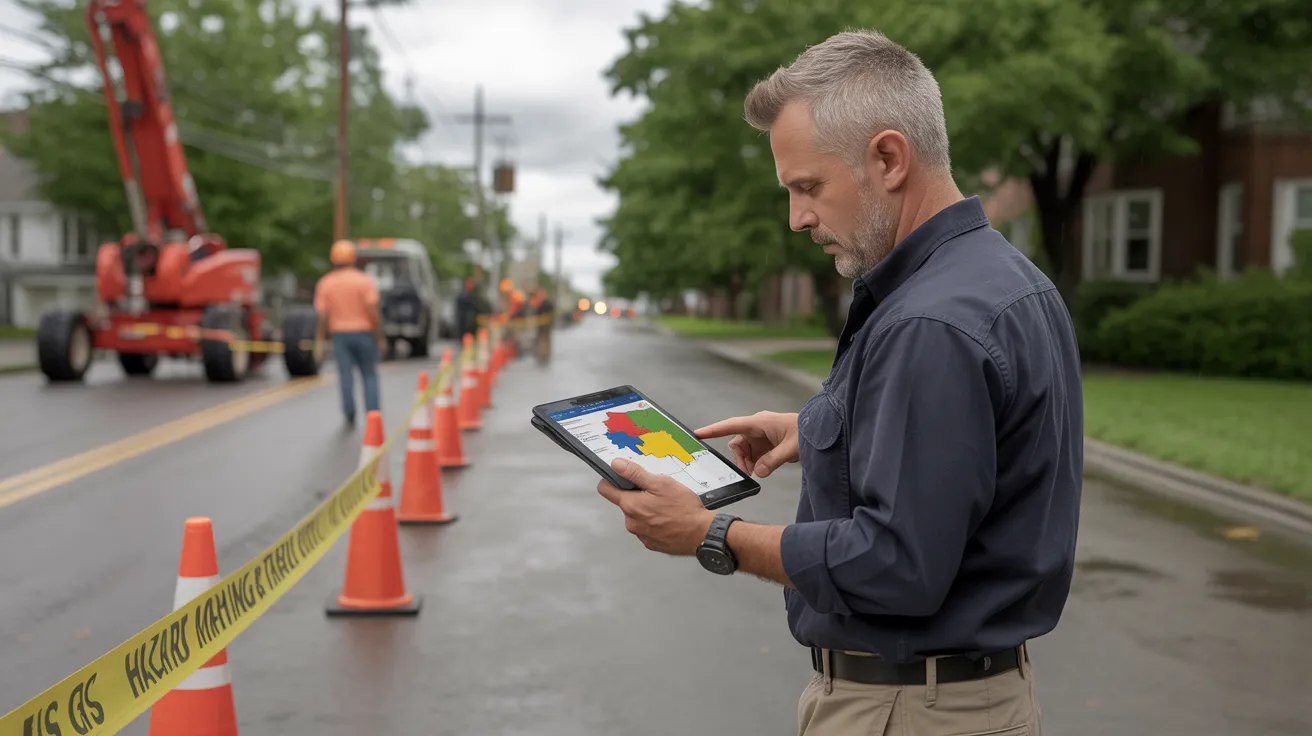
Following extreme weather conditions, Parkhill Tree Service springs into action to make sites safe, eliminate safety threats, and restore access across Sarnia. Customers benefit from swift support coordinated through a 24/7 dispatch, GPS-tracked fleet, and strategically placed equipment. Teams arrive with essential equipment including insulated saws, rigging gear, traffic control kits, and chipper/loader units to open essential corridors and safeguard utilities.
You benefit from community coordination with emergency responders, utilities, and public works to manage downed lines, blocked thoroughfares, and hazardous trees threatening structures. Crews implement ICS-style roles, establish safety perimeters, and follow ANSI Z133 and provincial guidelines. They conduct controlled removals, crane operations for heavy fallen trees, and material sorting for optimal transport. Documentation includes chronological photo records, material handling records, and detailed reports to assist with insurance claims and municipal reporting.
Hazard Evaluation Standards
While teams deploy rapidly, they won't proceed until a thorough hazard assessment verifies the location is clear and priorities are established. You'll see a systematic process: create exclusion zones, confirm utility status, and stabilize traffic interfaces. Workers complete risk mapping to identify stressed limbs, weakened stems, root-plate failures, and secondary strike hazards.
They utilize precision rangefinders, clinometers, and thermal imagers to detect energized conductors and hidden stress. Force distributions are assessed to forecast hazard trajectories. Hazard assessment tags and organizes sections by hazard category, pairing extraction methods to danger ratings: specialized rigging, machine-assisted removal, or precise felling. You'll receive thorough analysis, containing documentation, safety ratings, and protective measures. This approach decreases safety hazards, stops sequential breakdowns, and reestablishes access with proven safety standards.
Expert Stump Grinding & Restoration
Revitalizing your property starts with exact stump grinding that removes trip hazards, halts regrowth, and readies the site for future development. We calibrate grinder depth to 6-12 inches below grade, matching tree species characteristics and site loads. You benefit from controlled debris management, guarded work zones, and confirmed utility mapping prior to cutting.
After grinding is complete, we implement targeted root removal to stop lateral sucker formation and mitigate surface heave risks. We segregate chips from mineral soil to prevent nitrogen drawdown, then fill with a classified aggregate-soil blend that promotes compaction and soil stabilization. The final grade ensures positive drainage and uniform subgrade tolerances. If you plan hardscapes or replanting, we furnish compaction tests, amendment rates, and load-bearing recommendations so the restored footprint maintains stability and safety over time.
Disease, Pest, and Soil Management Approaches
Because tree health relies on early detection and targeted interventions, we incorporate assessment protocols, action points, and remedial steps into a comprehensive management plan. We begin with thorough inspections, using disease screening, pest detection, and foliage evaluation to identify diseases and insect presence. You receive specific action points that determine when to act, eliminating excessive interventions.
We begin by addressing soil limitations. We assess key soil parameters including pH, EC, CEC, and organic content, then utilize specific amendments and verified soil inoculants to boost root symbiosis and nutrient availability. For addressing pest and disease issues, we use targeted trimming, sterilization, and approved chemistries under comprehensive pest control strategies. We schedule applications according to life cycles, safeguard beneficial organisms, and record effectiveness. You receive thorough monitoring documentation, scheduled recheck intervals, and updates based on observable plant performance and environmental conditions.
Safety Standards, Equipment, and Insurance Coverage
Make sure the team uses professional-grade arborist equipment including climbing ropes, friction devices, calibrated chainsaws, and verified rigging gear. Ask for safety documentation conforming to ANSI Z133 and CSA/OHS guidelines, addressing PPE, aerial rescue preparation and detailed job hazard evaluations. Verify full liability and WSIB/worker's compensation coverage, and obtain certificates naming you as an additional insured before work starts.
Top-Quality Tree Care Equipment
Depend on Parkhill Tree Service to deploy industry-leading arborist equipment optimized for optimal performance. You get access to high reach aerial lifts with insulated booms, surface-friendly outriggers, and load monitoring to prevent overcapacity events. Crews use GPS guided fleet tracking to stage equipment efficiently and decrease idle time on-site. Chain saws come with inertia-activated chain brakes and low-kickback bars, while safety gear features traceable ratings that align with calculated forces. Chippers are maintained to OEM specs; chipper performance is verified through blade spacing verification, component positioning, and mechanical performance checks. Stump grinders feature guarding and emergency stops verified per CSA standards. Parkhill holds active liability and WSIB coverage, and records pre-job inspections, maintenance intervals, and calibration reports to document compliance and secure your property.
Rigorous Safety Protocols
Routinely, Parkhill Tree Service implements a comprehensive safety program that integrates safety measures, validated tools, and verified insurance coverage. You benefit from a well-established safety culture that implements workplace risk assessments, team safety meetings, and task allocations. Crews deploy safety gear aligned with task-specific risks, enforce lockout tagout for powered equipment, and install worksite signage to manage traffic flow and public safety. Supervisors oversee safety incident records and near miss tracking to enable corrective actions and documented hazard decrease. You'll notice verified instruments, compliant rigging, and safety compliance reviews documented before mobilization. Field teams follow provincial and ANSI/ISA standards, with ongoing education on fall protection, high-angle rescue, and power line safety. Documentation is compliance-verified, date-recorded, and validated at each phase.
Comprehensive Liability Coverage
Despite varying risk levels across different projects, Parkhill Tree Service guarantees each job with complete liability insurance that matches the company's engineered protocols and certified equipment. Clients obtain protection that covers genuine field hazards-encompassing rigging loads, aerial lift operations, chipper exposure, and traffic control interfaces. We establish clear policy limits for property loss, physical injury, and completed work, matching safety evaluations conducted before work commencement.
Our protection supplements CSA-compliant PPE, yearly equipment evaluations, and operational permits, covering aspects that self-insurance fails to protect. We provide certificates of insurance as required, specifying endorsements, additional insured status, and waiver of subrogation when required. If an incident occurs, our efficient claims process records responsibility flow, timestamps, and accident causes, expediting resolution while protecting your project schedule and budget predictability.
Straightforward Quotes, Scheduling, and Service Plans
Because clear information reduces risk and surprises, Parkhill Tree Service provides transparent, line-item quotes that specify scope, methods, equipment, disposal, traffic control, and permit requirements prior to starting work. You see transparent pricing linked with specific parameters-DBH, canopy spread, access constraints, and utility proximity-so you can evaluate alternatives and see what affects pricing. We document ANSI A300 practices, PPE, and exclusion zones in your work order.
You'll get a confirmed schedule window, prior service updates, and alternative solutions for adverse weather conditions or utility complications. Technicians show up with precision-tested tools and finished safety protocols. After completion, we deliver a detailed report with images and professional advice. To maintain healthy trees and lower the risk of issues, we feature ongoing maintenance plans with regular evaluations, systematic trimming, pest control checks, ground maintenance, and financial projections.
Questions & Answers
Can You Provide Environmentally Responsible Tree Disposal and Recycling Services?
Indeed, you can green disposal and timber recycling services. We separate timber, limbs, and wood chips for recycling: processing into lumber, mulch production, or biomass fuel. Where feasible, we position specific logs or brush collections for wildlife habitat, following municipal guidelines and invasive-species protocols. We sanitize our tools to avoid spreading pathogens and furnish comprehensive documentation. We'll provide detailed disposal strategies, weight records, and safety protocols conforming to ANSI A300 and ISA best practices.
Can I Keep the Wood Chips or Logs for Personal Use?
Yes, absolutely, you can maintain wood chips and logs. The impact is significant in the long run. Utilize chips for garden mulching; they stabilize soil temperature, suppress weeds, and maintain moisture. Let chips break down 3-6 months to reduce nitrogen drawdown. For logs, implement safe firewood storage: split for quicker drying, elevate the stack, shield only the top, make certain 15-20% moisture (use a meter), and position woodpiles 6-10 feet from structures to minimize pest and fire risk.
What Seasonal Discounts and Referral Programs Do You Provide?
Yes. You'll typically find seasonal deals during low-demand periods (late winter or mid-summer) for pruning, removals, and stump grinding. Ask for written terms, eligible services, and blackout dates to make sure safety-critical tasks aren't rushed. Many providers also offer referral bonuses-typically a fixed credit or percentage discount-after the new client completes and pays for service. Confirm limits per household, combination with other more info discounts, and expiration dates. Ensure all discounts appear on your final bill.
Do You Handle Municipal Permits and Bylaw Compliance Documentation?
You receive full permitting and regulatory guidance from your first call to project completion. Our team manages identifying necessary municipal requirements, completing forms, arranging arborist reports, and submitting all applications. We arrange required site visits, utility locates, and traffic control measures when needed. We provide comprehensive risk assessments, site maps, and tree work justifications conforming to ISA and ANSI A300 standards. We monitor authorization progress, maintain detailed records, and schedule work only after permit approval to maintain safety and legal compliance.
What Guarantees or Warranties Come With Your Services?
We offer a detailed service guarantee and a specific workmanship warranty for every job we complete. We clearly detail protection details in writing, including coverage period, exceptions, and resolution procedures. When problems occur from our workmanship within the warranty period, we return promptly, inspect issues, and fix to requirements at no cost. You receive post-service paperwork, pictures, and compliance records to confirm results. Alert us to problems within stated timelines so our team can examine, mitigate risk, and fulfill warranty obligations quickly.
Key Takeaways
You could gamble with unprofessional equipment and speculation, or you could rely on Parkhill's certified arborists and allow industry protocols tackle the challenging tasks. You'll receive detailed risk assessments, ISA-standard pruning, precise stump grinding, and covered removals that won't damage your property. When severe weather strikes, you're guaranteed quick response times, comprehensive strategies, and certified soil remediation. Speaking frankly, you're not just paying for tree work - you're guaranteeing safety, compliance, and reliable outcomes.